Lyra
A platform for mission procedure lifecycle management

One platform for authoring, validating, and governing mission procedures
Lyra is a modular software platform for the secure creation, validation, and lifecycle management of satellite operational procedures. It supports multiple procedure languages through extensible language packs, integrates with mission databases and control systems, and enforces controlled workflows for review, validation, and deployment.
Lyra is designed for complex multi-satellite procedure management and long-term operational sustainability.
Contact us and see how Lyra fits your mission.
First year of operations for Lyra in the GEO of the Eutelsat satellites.
Approximate number of satellites managed with shared and mission-specific procedures in Lyra, for the Eutelsat fleet.
The time our users take from procedure creation to operations using Lyra.
Procedures managed within one Lyra instance.
Key capabilities

Structured procedure authoring with real-time syntax and semantic checks.
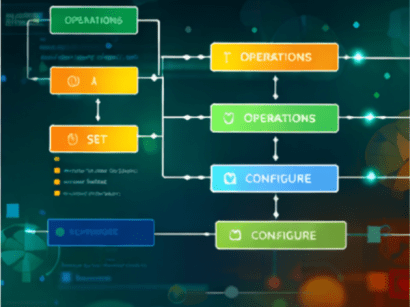
Language-agnostic architecture via modular language packs.
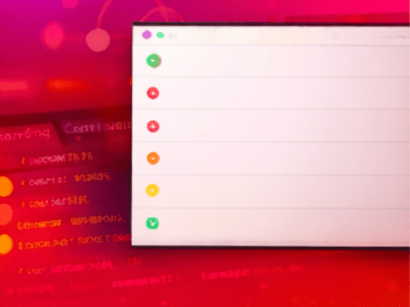
Integrated validation with mission databases and data files.
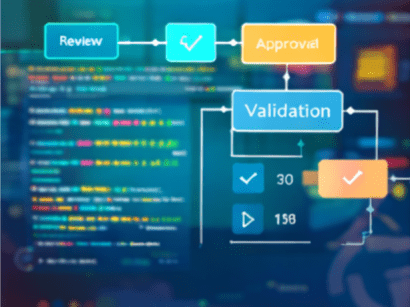
Controlled workflows with review, approval, and traceability, ensuring procedure integrity.

Support for constellation-scale and hierarchical procedures.
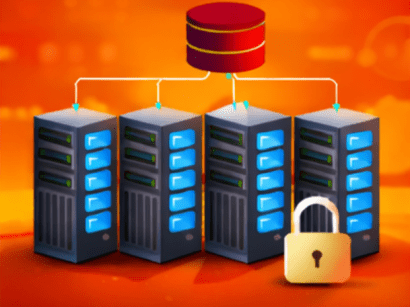
Secure, on-premise deployment aligned with mission constraints.
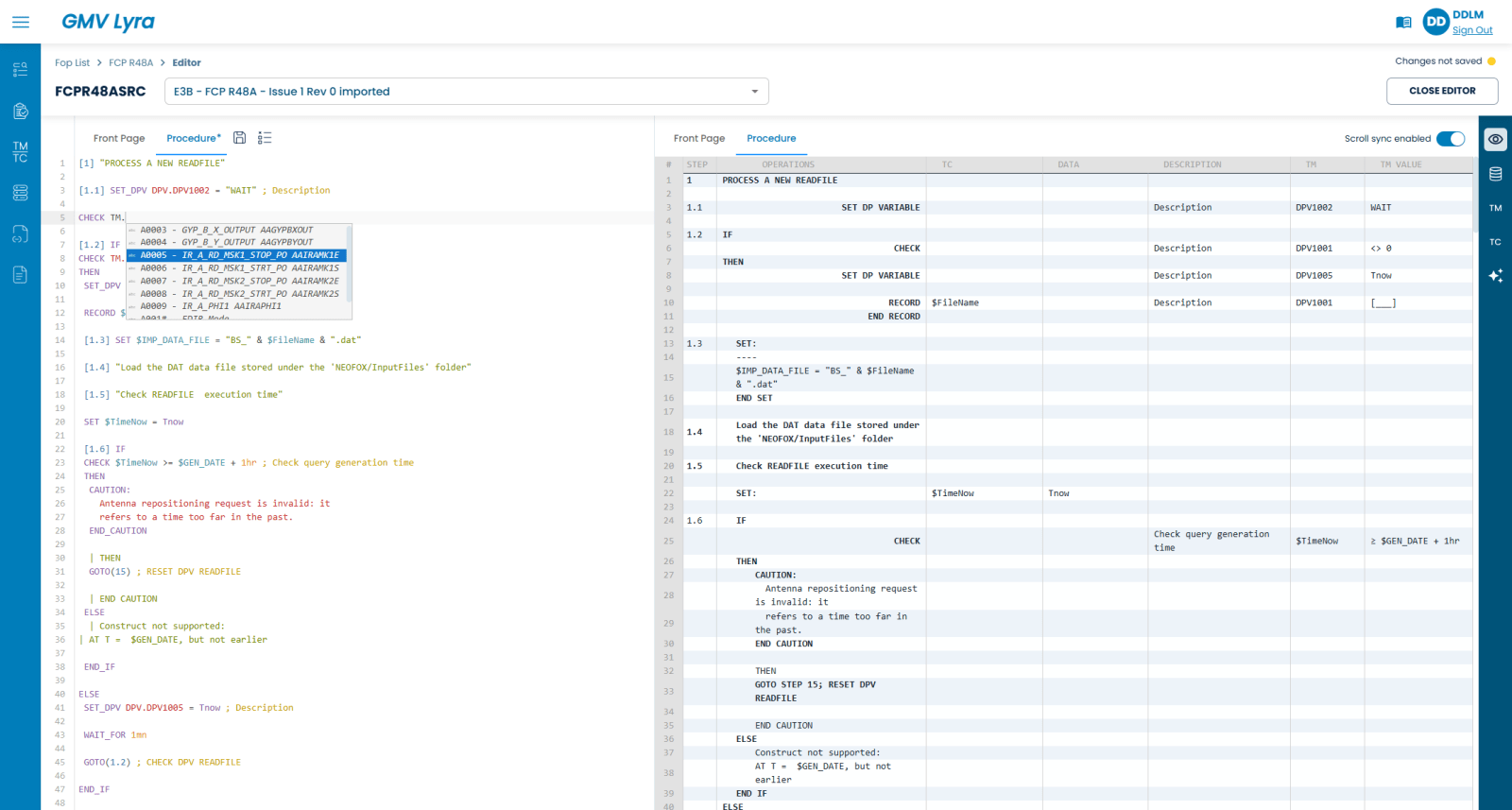
Lyra provides a professional authoring environment for operational procedures, combining a code-based editor with live previews and contextual helpers. Engineers benefit from syntax highlighting, semantic validation, and inline access to telemetry and telecommand databases.
The editor is designed to support both domain-specific languages and programming-based procedure languages, ensuring consistency, safety, and maintainability across large procedure libraries.
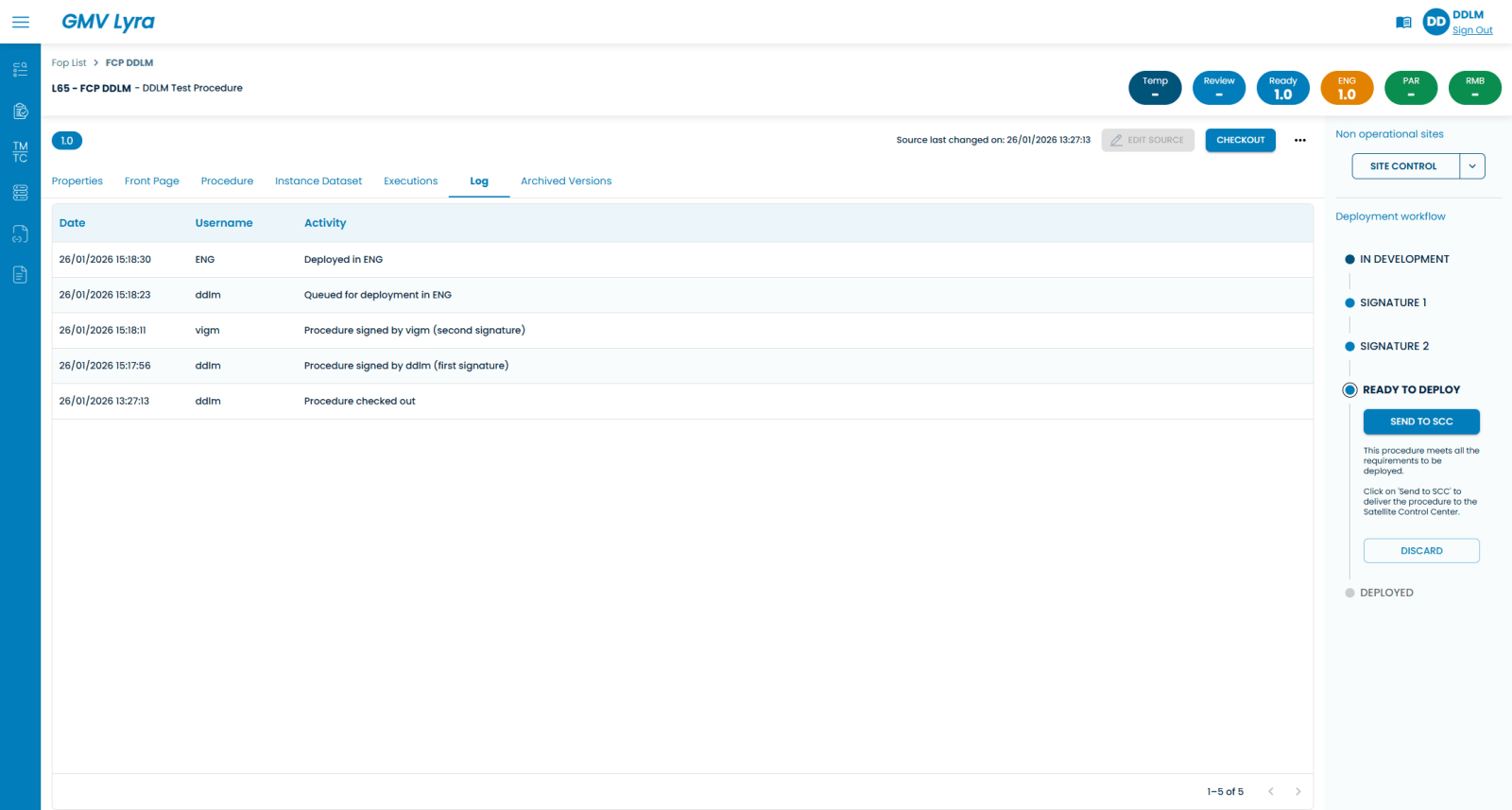
Lyra enforces controlled life cycles for procedures and procedure sets, including exclusive editing, versioning, validation, multi-level review, and deployment readiness.
Workflow states and transitions are configurable to align with client governance rules. All actions are traceable, auditable, and integrated with configuration control systems to ensure operational integrity.
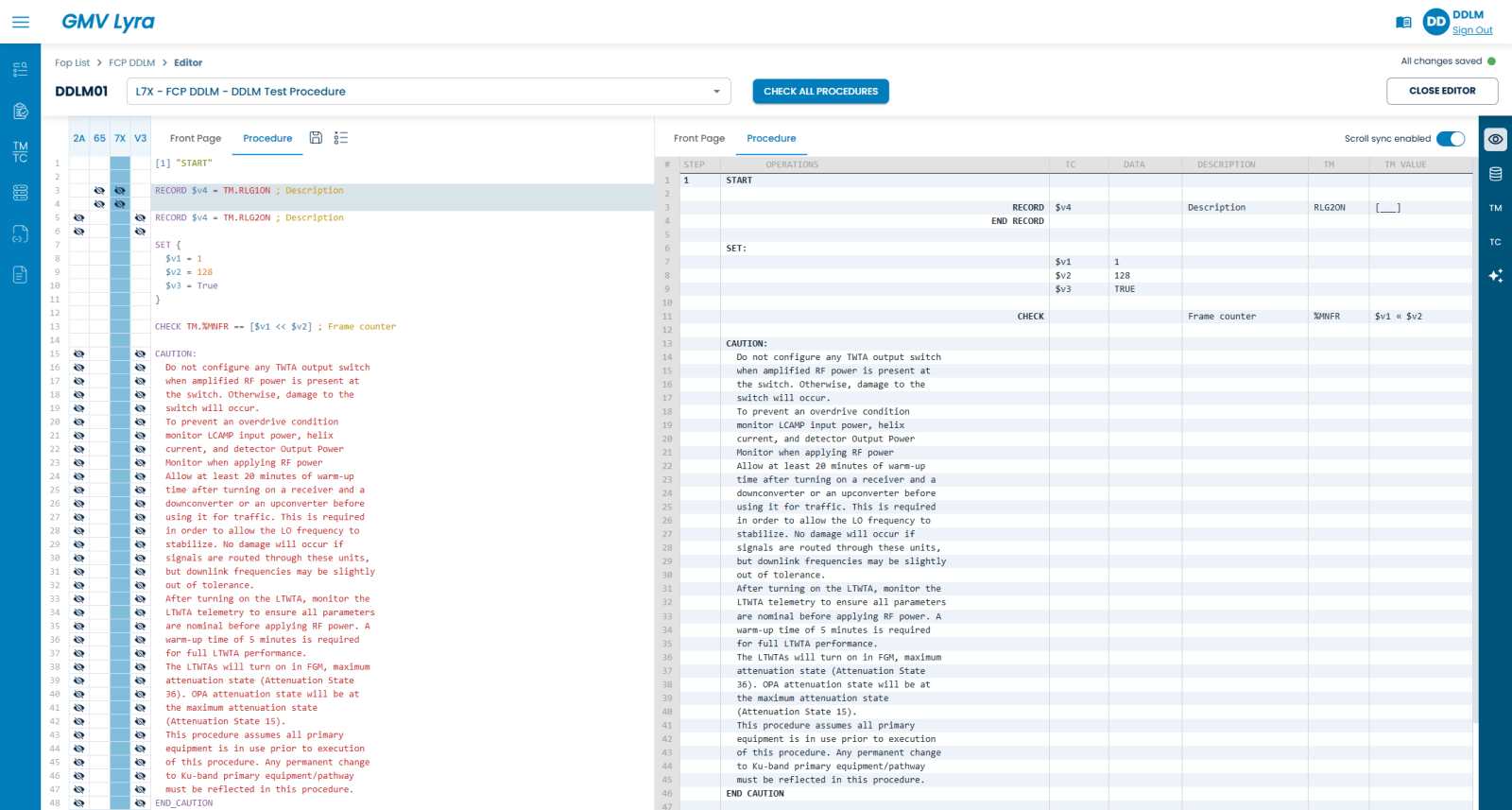
Lyra is built for multi-satellite and constellation missions. It supports hierarchical procedure models where generic, variant, and satellite-specific procedures coexist, ensuring the correct version is selected for each spacecraft.
This approach reduces duplication, simplifies maintenance, and enables efficient updates across large fleets while preserving mission-specific customization.
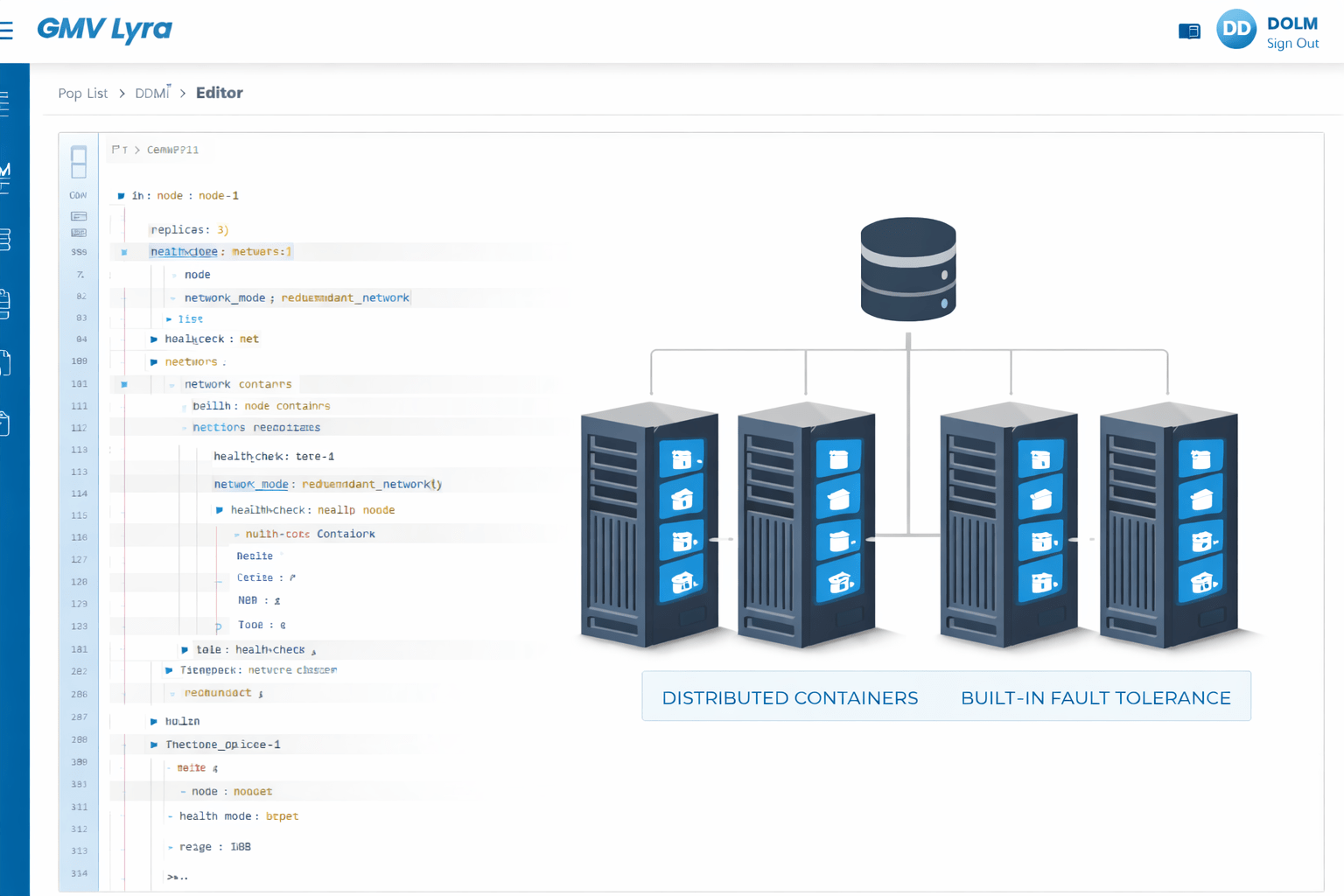
Lyra is deployed using modern container-based architectures designed originally for on-premise environments but also suitable for cloud environments. The platform supports multi-node deployments with built-in redundancy, service replication, and fault tolerance, ensuring high availability and resilience.
Critical components can be distributed across nodes to avoid single points of failure, while allowing controlled scaling and maintenance. This approach provides a robust operational foundation aligned with long-term availability and infrastructure constraints.
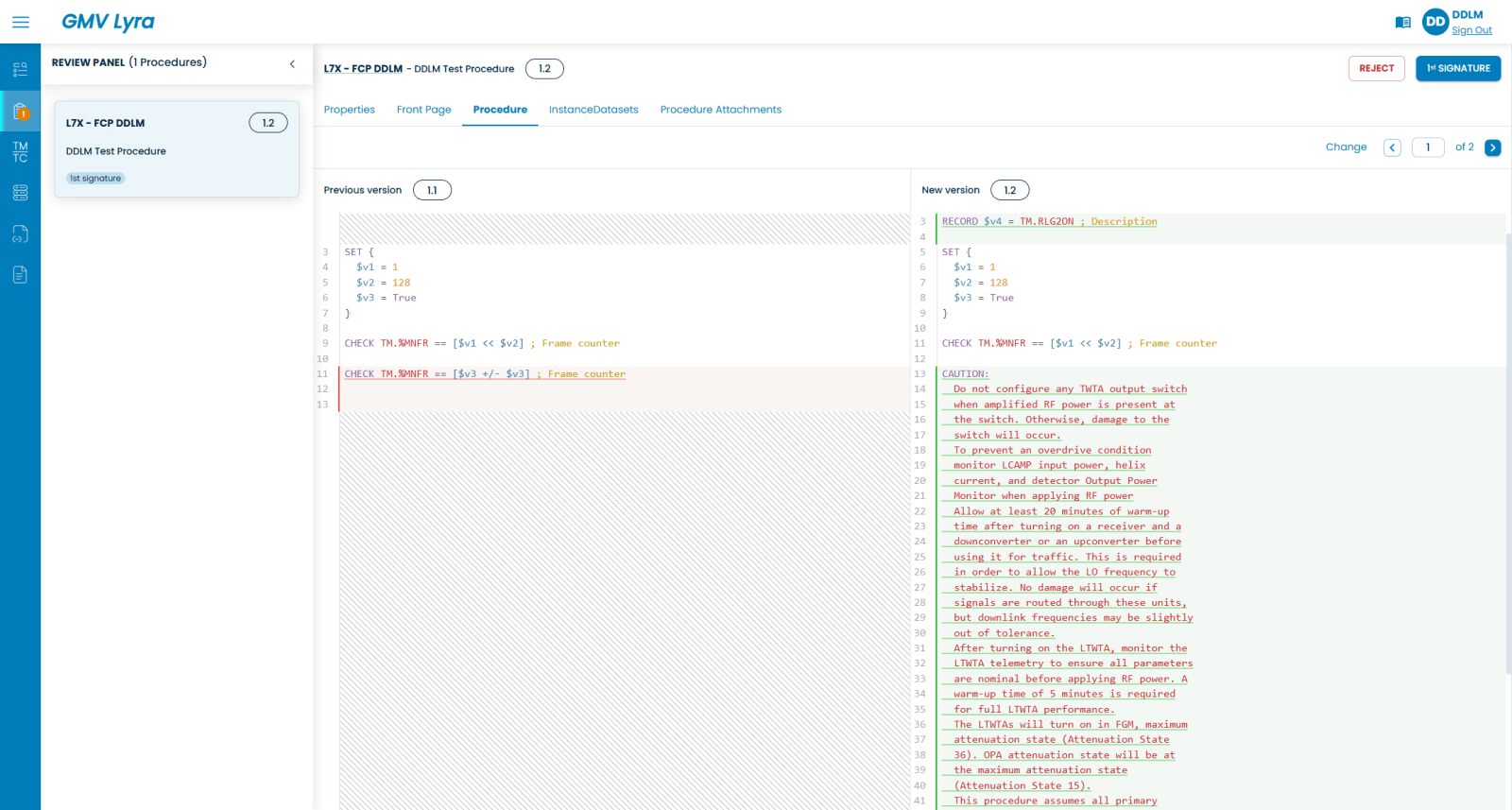
Lyra provides a structured and user-friendly review panel designed for critical operational procedures. The review process is based on a double-step signature with authenticated users, ensuring accountability and integrity at every stage.
Reviewers can easily inspect all changes through clear visual diffs, navigate them step by step, and validate both content and metadata before approval. Built-in integrity checks guarantee that only reviewed and authorized procedures can progress in the lifecycle.
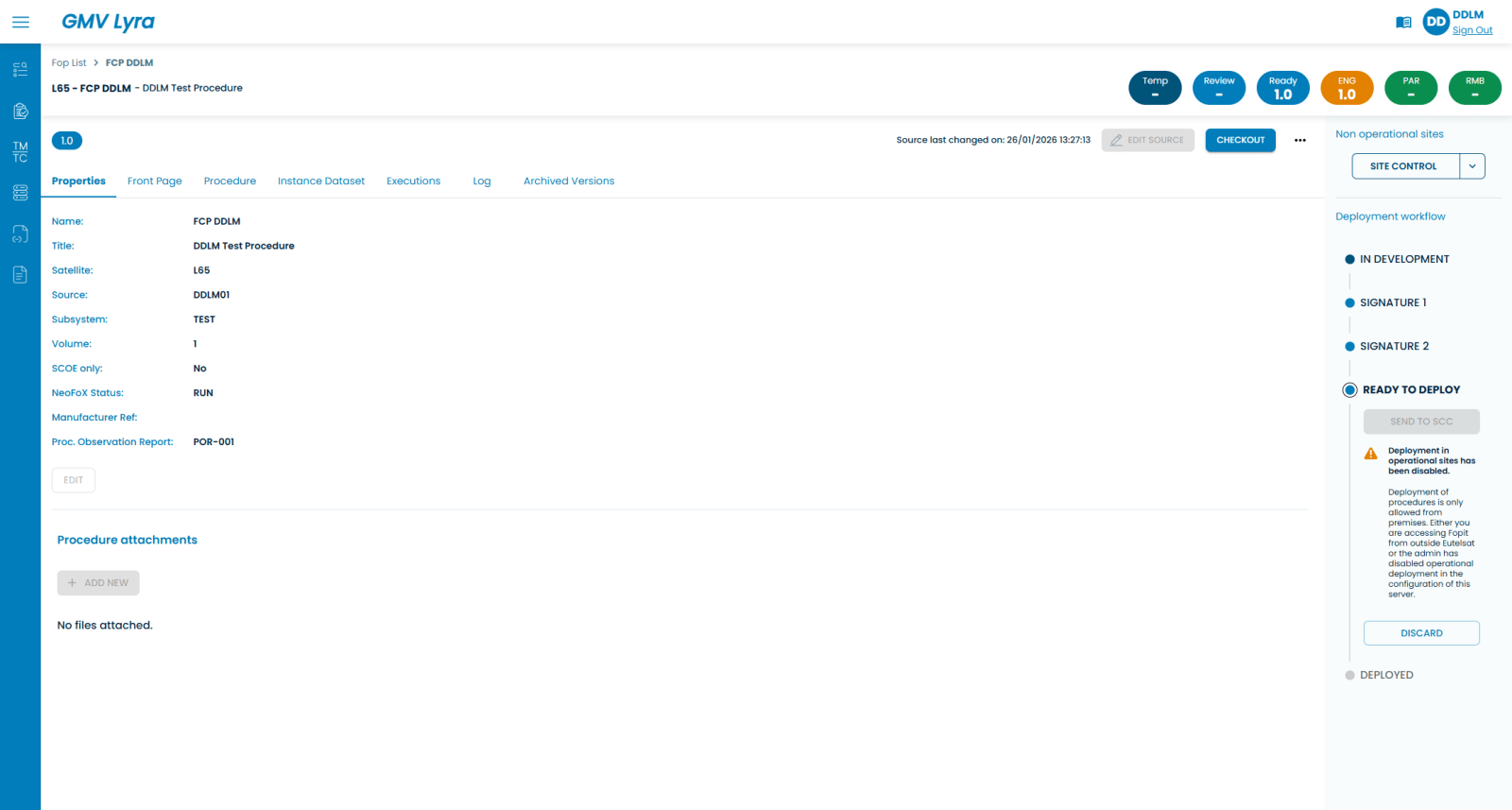
Lyra supports secure remote work by clearly separating activities that can be performed offsite from those requiring onsite presence. Users can safely create, edit, and validate procedures from home, working with the same review tools and integrity checks as on-premises.
Critical actions such as deployment are explicitly restricted to secure environments, enforced by configurable access profiles and workflow controls. This approach combines flexibility for engineers with strict protection of operational systems
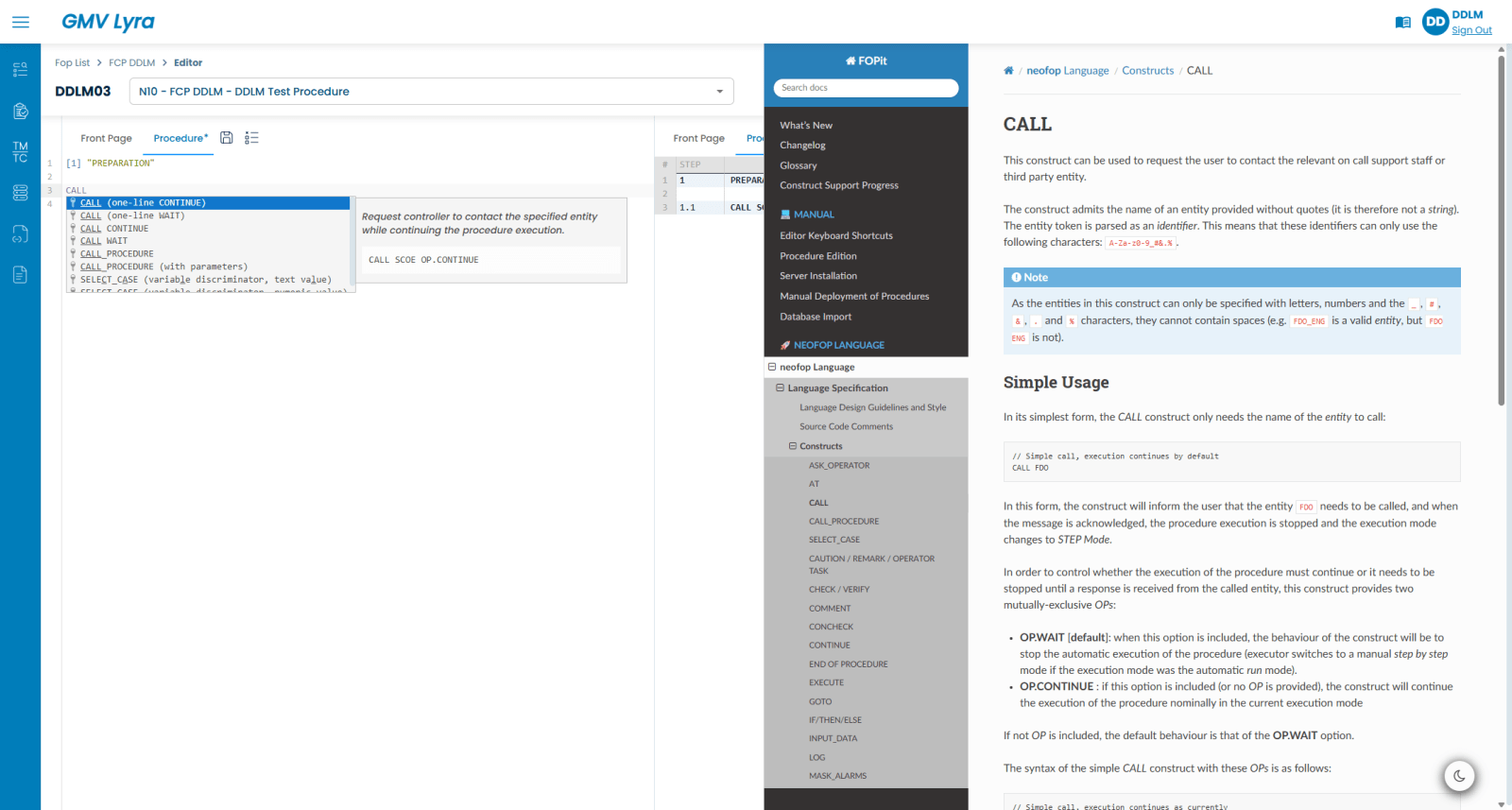
Lyra includes built-in, interactive product documentation directly accessible from the platform. Users can explore the full definition of the supported procedure languages, review constructs and options, and consult practical usage examples in context.
Documentation is continuously aligned with the product through automated test results and validation outputs. Each release also provides integrated “what’s new” reports, allowing users to track functional increments and evolutions without relying on external manuals.